
The God Who Commands Our Worship | Deuteronomy 12:29-32 & Leviticus 10:1-3 | Worship by the Book
If you were meeting a head of state, you wouldn't just show up whenever you felt like it, wander the room, and talk about whatever crossed your mind. There's a protocol, and skipping it wouldn't read as passion. It would read as a threat.
This week we began a new four-week series called Worship by the Book, looking at what's known as the Regulative Principle of Worship: the conviction that God alone has the right to determine how he's worshiped. Not because he's difficult to please, but because he's holy, and because he's told us plainly, out of love, rather than leaving us to guess.

Known by Who Redeemed You | Galatians 2:15-21 & Colossians 3:1-4 | Our Identity in Christ
Where do you actually find your identity? This message, "Known by Who Redeemed You," turns to Galatians 2:15–21 and Colossians 3:1–4 to answer that question the way Scripture does: not in what you build, earn, or accomplish, but in what Christ has already done for you. The apostle Paul's own words, "I have been crucified with Christ," show that self-justification always falls short, and that a right standing before God comes only through faith in Jesus.
The Threefold Witness | 1 John 5:6-12 | Walking in the Light
This week's message continues the "Walking in the Light" series through 1 John, turning to 1 John 5:6-12. John builds a case for who Jesus is, grounded not in feeling or speculation but in real, historical evidence. Water and blood point to Jesus' baptism and his death on the cross, both concrete events that confirm he came in the flesh. Alongside these, the Spirit testifies to the same truth, working faith in the hearts of God's people. These three witnesses agree, and John reminds his readers that this kind of corroborating testimony was already understood to carry weight. The passage closes with the heart of the matter: whoever has the Son has life, and whoever does not have the Son does not have life. This message offers both assurance to the believer and a clear call to anyone still holding back.
The Visible Evidence of the Invisible God | 1 John 4:7-21 | Walking in the Light
No one has ever seen God. That's the plain claim John makes in 1 John 4:12, and it raises an honest question: how can an invisible God be known? This week's message from 1 John 4:7-21 walks through John's answer. The love of God was first made visible in the sending of His Son, whose sacrifice on the cross defines what real love looks like. That same love is now meant to become visible through the people of God, shaping how believers treat one another, especially those who are hardest to love. And the love that takes root in us has a second effect: it removes the fear of judgment, replacing it with confidence rooted in the finished work of Christ. Watch this week's sermon, "The Visible Evidence of the Invisible God," part of the Walking in the Light series through 1 John.
Listening to the Voice of Truth | 1 John 4:1-6 | Walking in the Light
Think about the difference between being acquainted with someone and truly knowing them well enough to recognize their voice anywhere, even in a crowded room or over a bad connection. That kind of recognition doesn't come from information. It comes from familiarity.
The Message from the Beginning | 1 John 3:11-24 | Walking in the Light
We expect things to get better with time. Cameras, phones, and televisions have all gone through version after version, each one solving a real problem the last one had. It's natural to think everything works that way, that the old version is due for an update. But in 1 John 3:11-24, John points back to something that has never changed since the beginning: the call to love one another. Using Cain as a warning and the cross as the standard, John shows the difference between love that's just talk and love that costs something. He closes by showing how that kind of love settles a heart that feels far from God. This week we walk through what real, sacrificial love looks like, and why it was never in need of an upgrade.
Purifying Hope | 1 John 2:28-3:10 | Walking in the Light
What does it actually look like to belong to God's family? This week's message in the "Walking in the Light" series through 1 John takes up that question directly. John moves from a call to abide in Christ with confidence, not shame, into the striking reality that believers are already called children of God — heirs, not strangers hoping to be let in. From there, the passage turns practical: the hope of seeing Christ face to face is meant to actively purify a life right now, and the evidence of true sonship is a life marked by pursued righteousness and love for one another. The message closes with a question worth sitting with all week: does the hope of Christ's appearing actually change how you're living today?

What Are You Trusting? | Psalm 52 | Dutch Festival Evening Service
Psalm 52 opens with betrayal. Doeg the Edomite reported a priest's kindness to David, and the result was the massacre of an entire town. Out of that story, David asks a question that reaches far past his own century: what are you actually trusting in?
Abide in Him | 1 John 2:18-27 | Walking in the Light
This week's message in the "Walking in the Light" series moves into 1 John 2:18-27, a passage that names a hard reality: opposition to the truth about Jesus doesn't only come from outside the church, it can come from within. John calls the false teachers "antichrists," not as a title reserved for some future figure, but as anyone who denies that Jesus is the Christ. Against that backdrop, he reminds believers of what they already have, the anointing of the Holy Spirit and the truth they were taught from the beginning, and calls them to a single response: abide. Stay connected to the truth of the gospel, and it will hold you all the way to the finish.
The Passing Shadow of Worldly Desire | 1 John 2:15-17 | Walking in the Light
John does not leave his readers guessing about what he means by the things of the world. In 1 John 2:15–17 he names them plainly: the desires of the flesh, the desires of the eyes, and the pride of life. These are not merely the obvious sins. They are the respectable ones — comfort, the itch to acquire, comparison and envy, and the arrogance of self-sufficiency that forgets we are creatures and not gods.
Old Commandment Made New | 1 John 2:7-14 | Walking in the Light
When the Apostle John tells his readers that the commandment he is writing is not new — and then says it is — he is not contradicting himself. He is pointing us to Christ.
The command to love one another is ancient, rooted in the nature of God himself before the foundation of the world. But in Jesus, that command has been remastered. The same song, heard now in full depth and clarity, illuminated by the life, death, and resurrection of the one who loved us first.
In this sermon from our series Walking in the Light, Pastor Mark Groen traces John's movement through 1 John 2:7–14 — from the old command made new, to the sobering floodlight John turns on the church, to the unexpected pastoral comfort that closes the passage. John does not end with the indictment. He ends with assurance: your sins are forgiven, you know the Father, you have overcome the evil one.
The light exposes. But the light also leads us home.
Wrath Turned Aside | 1 John 2:1-6 | Walking in the Light
Sin rightly deserves the wrath of God. So where does that wrath land? In this sermon from 1 John 2:1-6, we look at two words you may not use often but that are essential to the gospel: advocate and propitiation. John writes as a father in the faith, calling believers to holiness while reminding them that when they fail — and they will — they have an advocate with the Father, Jesus Christ the righteous.
God is Light | 1 John 1:5-10 | Walking in the Light
What happens when a patient refuses to accept his doctor's diagnosis? He may feel fine. He may insist nothing is wrong. But his denial doesn't change the test results — it only delays treatment.
In 1 John 1:5–10, the Apostle John makes the same case about our spiritual condition. God is light, and in him is no darkness at all. That declaration exposes everything. To claim fellowship with God while walking in darkness is hypocrisy. To say we have no sin is self-deception. And to say we have not sinned is to make God a liar.
Eye-Witness to the Word of Life | 1 John 1:1-4 | Walking in the Light
The Apostle John wastes no time. Rather than opening with a traditional greeting, he goes straight to his foundation: that which was from the beginning, which we have heard, which we have seen with our eyes, which we looked upon and touched with our hands — the Word of Life.
He Passed Through the Heavens | Luke 24:44-53 & Hebrews 4:14-5:10 | The Ascension of Jesus
The ascension of Jesus Christ is one of the most practically significant — and most neglected — doctrines in the Christian faith. We confess it in the Apostles' Creed and the Nicene Creed, but for many believers it functions as little more than a transitional fact: Jesus rose, then He left, now we wait.
This week's sermon from Luke 24:44–53 and Hebrews 4:14–5:10 challenges that assumption. When Jesus ascended, the disciples didn't grieve — they returned to Jerusalem with great joy. Why? Because they had come to understand that His departure was not a loss but an accomplishment. The cross and the empty tomb were not detours; they were destinations. And the ascension was the plan all along.
Redemption Secured | Ruth 4:1-22 | Redeeming Love
Have you ever looked at a 3-dimensional "Magic Eye" image? At first glance, it looks like a meaningless pattern of ink, but once your eyes adjust, a complete picture comes off the page.
This Sunday, we saw the book of Ruth do the exact same thing. In chapter 4, the "messy" story of funerals, famines, and foreigners suddenly clicks into focus as a royal legacy. We followed Boaz to the city gate, where he legally secured the redemption of Ruth and Naomi. While a closer relative walked away to protect his own temporary inheritance, Boaz stepped forward with integrity, becoming the grandfather of King David and an ancestor of the Messiah.
The Redeemer’s Kindness | Ruth 3 | Redeeming Love
Ruth 3 is one of the most tension-filled chapters in Scripture. On the threshing floor, Naomi’s plan unfolds, Ruth takes a bold step, and Boaz is faced with a significant decision.
Every part of this moment carries risk. Each person involved could take the easy path—one shaped by convenience, desire, or self-preservation. But instead, Ruth acts with integrity, and Boaz responds with godly character.
Under His Wings | Ruth 2 | Redeeming Love
It is an amazing feeling when someone goes above and beyond for you. In our world of limited resources, we rarely see people disregard their own limitations to help someone else—especially someone who has no claim on them. Yet, this is exactly the type of generosity we see in Boaz as we move into the second chapter of Ruth.
This week, we followed Ruth into the fields. As an unclean Gentile and a poor widow, she expected only the scraps left on the fringes. Instead, she found a man who provided safety, water, a seat at his table, and an abundance of grain that left her mother-in-law, Naomi, astonished.
The Breadless House | Ruth 1:1-5 | Redeeming Love
Have you ever felt truly lost? Not just "wrong exit on the highway" lost, but a deep sense of meaninglessness in navigating life’s trials?
This week, we began our study of the book of Ruth by looking at the first five verses of chapter one. The story starts in a dark place: a famine in Bethlehem (the "House of Bread") and a family’s decision to leave the Promised Land for Moab. We see the tragic consequences of seeking "bread" apart from God’s covenant, as Naomi is left widowed and childless in a foreign land.
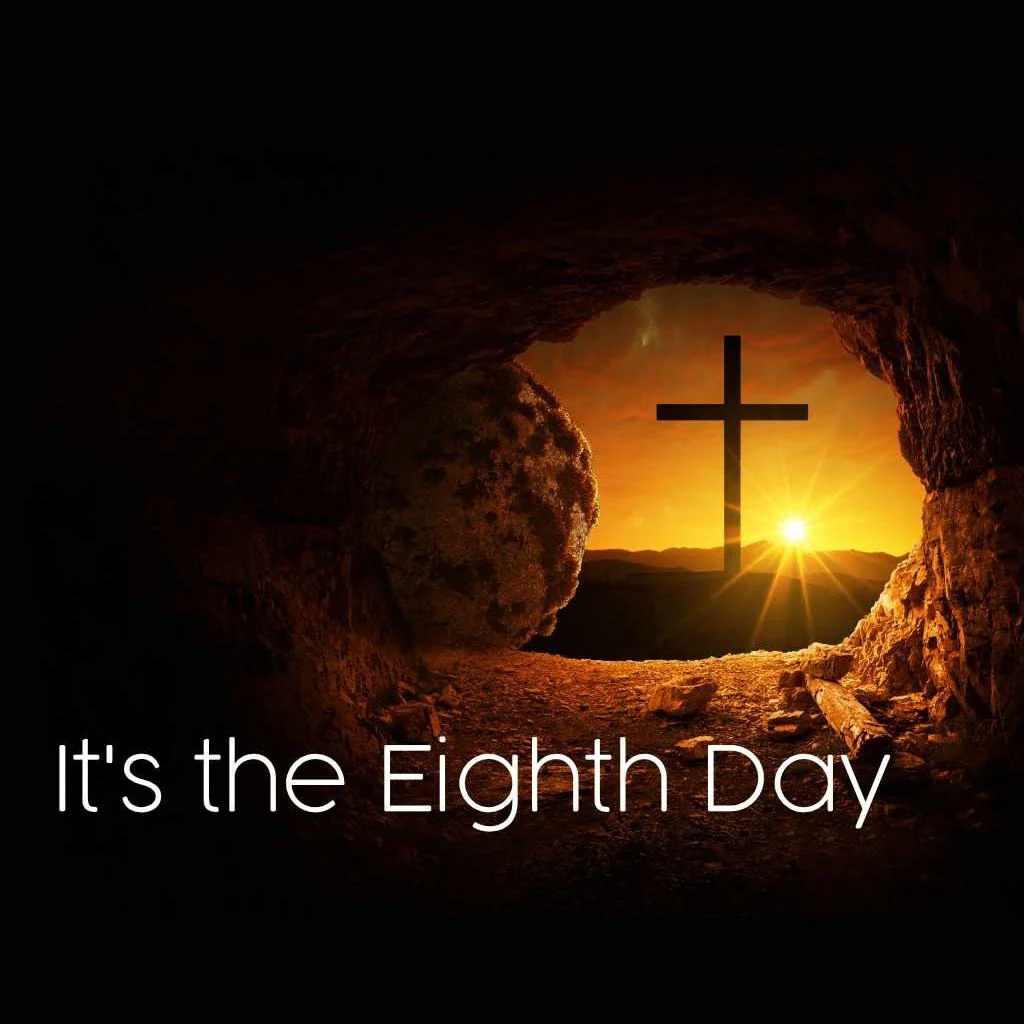
It’s the Eighth Day | Luke 24:1-12 | Resurrection Sunday
When we experience loss, we generally know what to expect. Since the banishment of our first parents from the Garden, death has reigned with a predictable, heavy rhythm. We work for six days, we rest on the seventh, and the cycle repeats—until, one day, it stops.
But as we see in Luke 24, the women who went to Jesus' tomb to perform the expected rituals of death found something earth-shattering. The stone was rolled away, and the body was gone.